by Meir Edrey, Adi Erlich, and Assaf Yasur-Landau
In the 1970s a chance discovery by a diver revealed a large cache of hundreds of terracotta figurines on the seabed opposite of Shavei Zion in northern Israel. The site, located some 5km north of Akko, is found nearly 1km off the coast in a depth of 8-11m. It is clear this was never a terrestrial site, and the excavators interpreted it as representing the cargo of a shipwreck dated to the 5th century BCE.
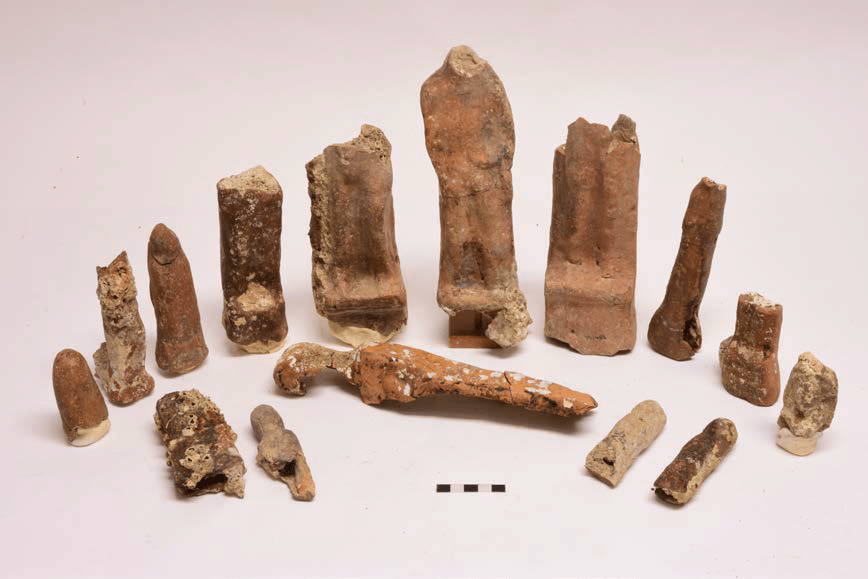
Our re-examination of the site and its finds, both ceramics and terracottas, revealed that it is unlikely the Shavei Zion figurine cache represents a shipwreck. It seems that both the pottery and the figurines were accumulated at the site over a long period of time, possibly from the late 7th to the late 4th centuries BCE. Therefore, it seems Shavei Zion was a cultic site in which maritime rituals were performed that included the casting of votive offerings into the sea. This interpretation can shed new light on multiple other underwater figurine sites across the Mediterranean.
The Mediterranean Archaeological Trust played an instrumental role in the study of the Shavei Zion assemblage, as it funded the petrographic analysis of ca. 10% of the entire assemblage, revealing that the clay used for the figurines and ceramic vessels originate from a wide area in the Phoenician homeland, tying the Phenomenon to the Phoenician culture on the one hand and suggesting that the site of Shavei Zion may have been used for religious pilgrimage.
For more information on this project, please reach out to Dr. Meir Edrey via email at edrey.meir@gmail.com
Dr. Edrey is the Professional Director of the Recanati Institute for Maritime Studies. He is also a research fellow, adjunct lecturer, and post-doctoral fellow at the Department of Maritime Civilizations at the University of Haifa, and adjunct lecturer and research fellow for the International MA Program of the Department of Archaeology and Ancient Near Eastern Cultures at the Tel Aviv University.

 M.A.T.