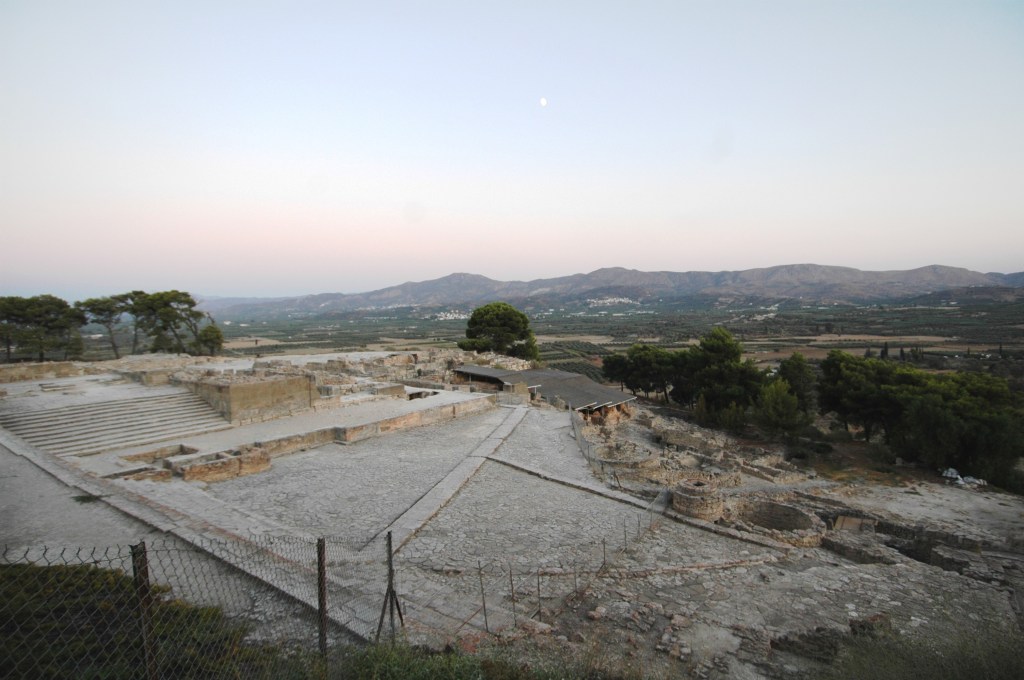
The Bronze Age site of Phaistos, located in Southern Crete, has been excavated by the Italian Archaeological Mission since 1900. Among the two Minoan palaces of Phaistos, the First Palace is the only palatial building on Crete providing crucial evidence of the Protopalatial period (MM IB – MM IIB: 19th – 17th c. BC), corresponding to the emergence of the palatial societies on the island. Besides the First Palace, Phaistos has also revealed exceptional evidence of contemporary wealthy Protopalatial houses dating to MM IIB.
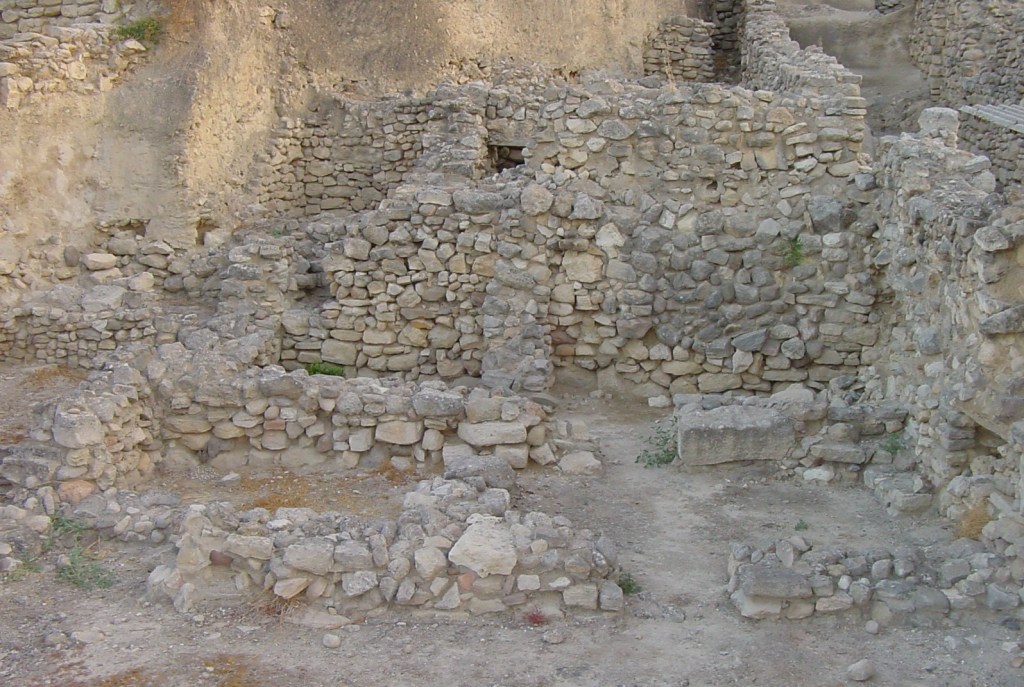
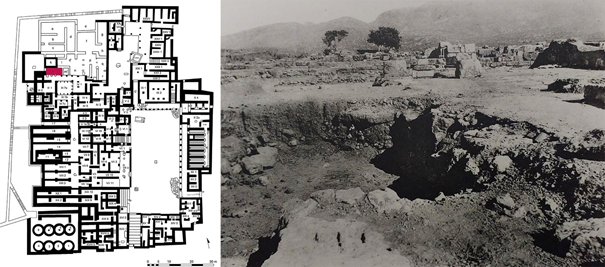
Among the Protopalatial houses of Phaistos, the House to the West of the Middle West Court of the Palace is unique for its position, its large size (14 rooms) and complex layout (with storage and working spaces), and its exceptional number of ceramic vases (more than 1000). Its publication not only yields a vast body of data on Protopalatial pottery, but also contributes to the broader discussion on the function/s of the Phaistian Houses, shedding new light on of the role of these wealthy houses in the administration and/or promotion of the palatial system in Protopalatial times.
The MAT grant was used for the final review of the pottery from the House and for producing further drawings and photographs of the numerous finds stored in the Stratigraphic Museum at Phaistos, an important step for the publication of the Protopalatial House to the West of the Middle West Court of the Phaistos Palace.
The Minoan Palace of Phaistos: the Middle West Court of the First Palace (Photo: I. Caloi; courtesy of the Italian Archaeological School at Athens)Phaistos: the Protopalatial House to the West of the Middle West Court of the First Palace (Photo: I. Caloi; courtesy of the Italian Archaeological School at Athens)
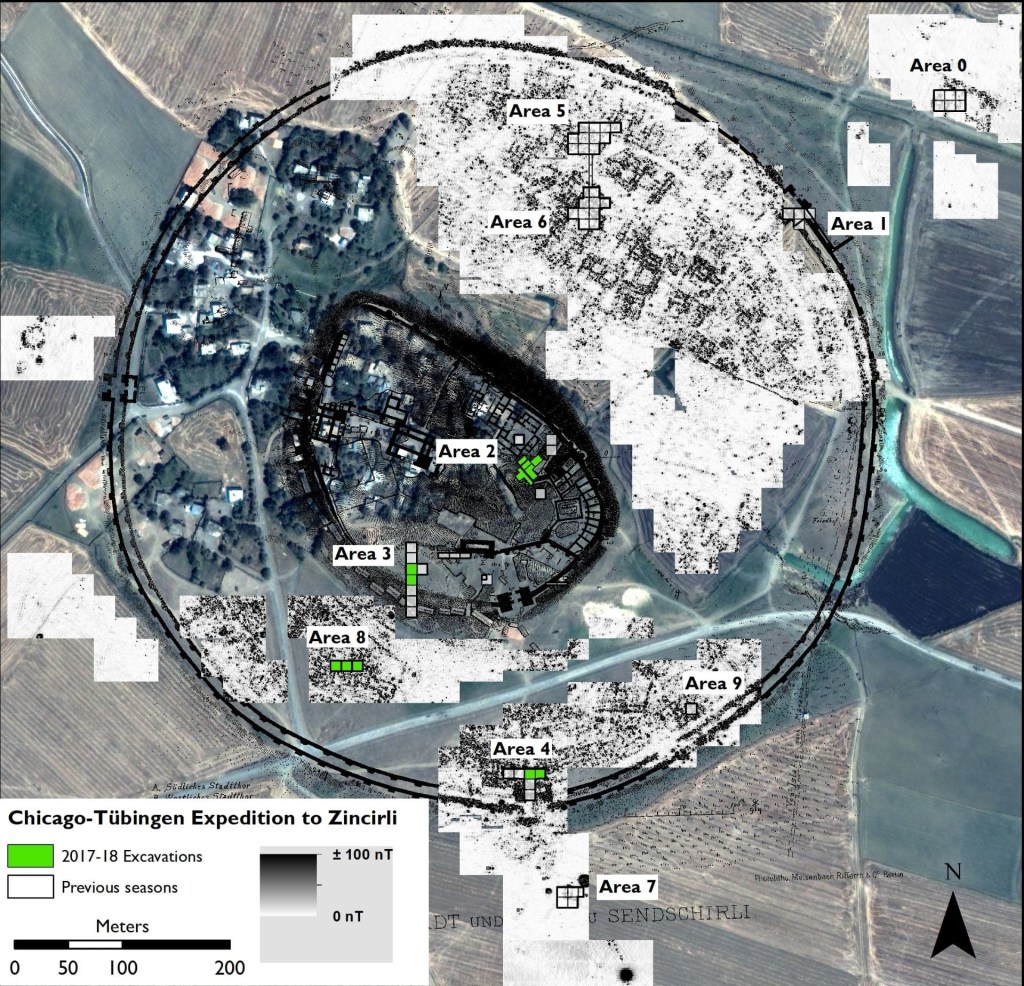
Zincirli Höyük is located in southeastern Turkey, in the İslahiye Valley on the eastern slope of the Amanus mountains, 30 kms north of the Syrian border. It is one of the earliest excavations in the Near East, since the German expedition of the Orient-Comité revealed between 1888 and 1902 the imposing remains of the Iron Age capital of the Aramaean kingdom of Sam’al. Since 2006 new excavations by the Universities of Chicago and Tübingen are reassessing the knowledge of the Iron Age town, exploring for the first time the underlying Bronze Age settlement.
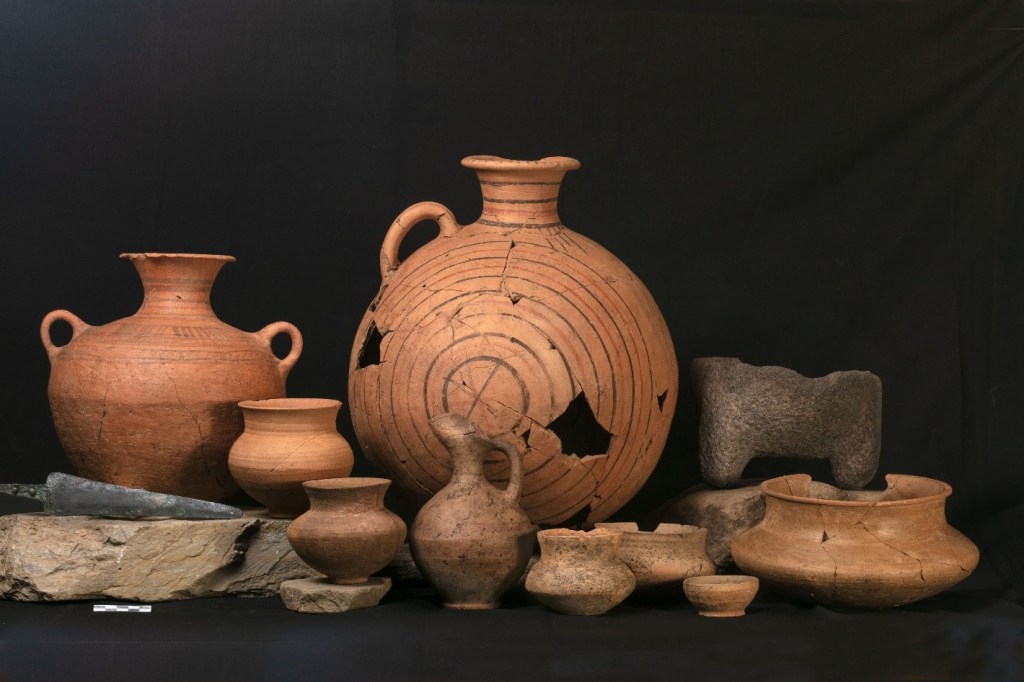
Excavations in Area 2 are revealing a complex of buildings dated to the Middle Bronze Age, with an extremely rich inventory of ceramics left in situ after a violent destruction. The excellent state of preservation of the materials offers a unique chance to investigate this period within a broader regional perspective. The ceramic assemblage is dated to the MB II (1800-1600 B.C) and is composed by fine and painted wares, as well as kitchen, simple and storage wares. Some remarkable shapes of painted pottery such as globular flasks were probably related to wine transportation and consumption, showing how Zincirli in the first half of the 2nd millennium B.C. was part of the complex network of exchanges stretching between Mesopotamia, northern Syria, central Anatolia and the eastern Mediterranean coast.
MAT’s generous grant has been extremely significant to cover the expenses of the research team involved in documenting, drawing and studying the large amount of Middle Bronze Age pottery. The grant allowed the work of two pottery specialists and an illustrator in Turkey, in order to prepare the study which is going to be published in the preliminary report on the Bulletin of American Schools of Oriental Research and presented at the 12th ICAANE in Bologna in April 2020.
Fig. 1. Map of Zincirli showing the ten current excavation areas, with the geomagnetic survey results and the architectural plan made by the German expedition in 1894 both superimposed on a modern satellite image of the site. Elaborated by Jason Herrmann. Courtesy of the Chicago-Tübingen expeditionFig. 2. Selection of ceramics and small finds found on the floor of Room DD10 of Area 2. Photograph by Roberto Ceccacci. Courtesy of the Chicago-Tübingen expedition
“The Iron Age Pottery of Zincirli Höyük: An Assemblage Between Neighbouring Traditions”, Studi Micenei ed Egeo-Anatolici Nuova Serie (SMEA NS) 5 (2019), pp. 165-184.
K.R. Morgan, S. Soldi, “Middle Bronze Age Zincirli: An Interim Report on Architecture, Small Finds, and Ceramics from a Monumental Complex of the 17th Century B.C.”, Bulletin of the American Schools of Oriental Research (submitted July 2019; accepted August 2019; expected 2020).
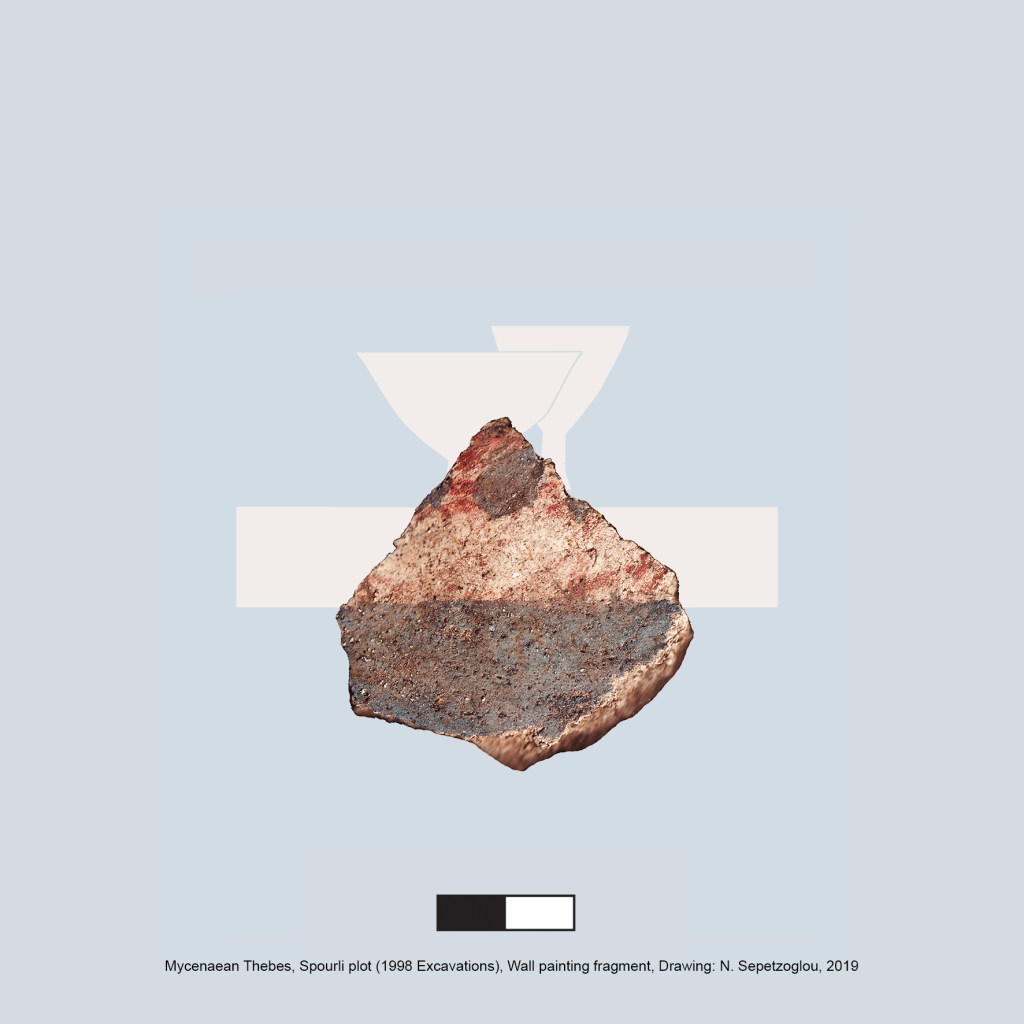
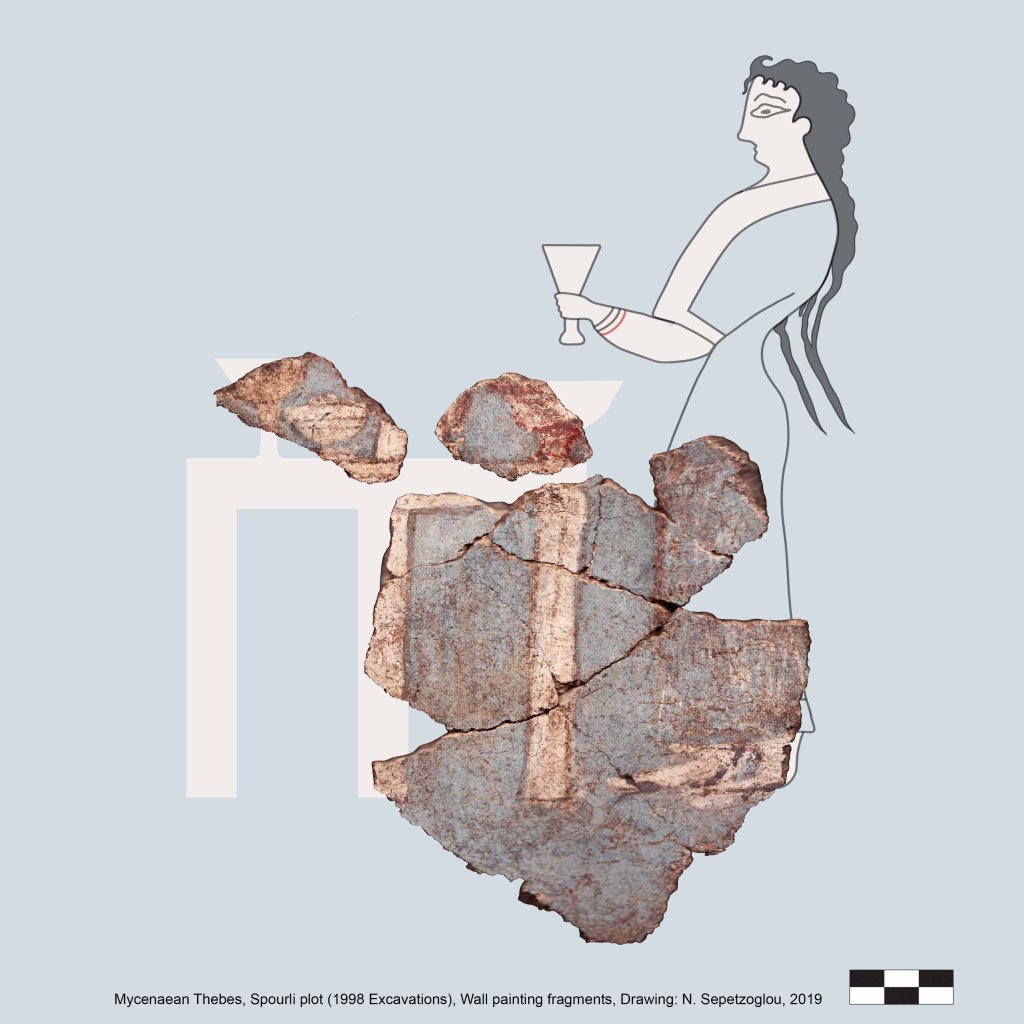
The wall paintings from Spourlis Plot, at the heart of the Mycenaean Palatial site of Thebes, is an assemblage consisting of 3055 fresco fragments excavated in 1998. Since 2016, the research team worked on identifying and reconstructing the iconographic themes in miniature and medium scale that decorated the walls of major structures. These themes vary from chariot processions to architectural constructions, including processions of women, male figures marching, compositions with griffins, plant motifs, decorative bands and other significant, but fragmentary scenes.
Although the wall painting assemblage from Spourlis Plot was extremely fragmented, research revealed the wealth of the local artistic repertoire, with images extremely rare, if not unique, within the world of Late Bronze Age Aegean arts. For example, a scene in miniature scale was identified depicting a woman standing in front of a desk with various drinking cups visible, perhaps as part of a ceremony. It can be concluded that the artists at Thebes had the skills to create complex narrative scenes, as in the majority of the mainland Mycenaean centres.
During these four study seasons, MAT supported the project and with its generous financial assistance, allowed the team to travel to the Museum of Thebes, record and explore again and again in detail the trays with the wall painting fragments, in order to identify new themes and motifs and suggest new reconstructions that will be presented in the forthcoming publication.
Tentative reconstruction drawing of two drinking cups, next to each other (N. Sepetzoglou 2019)Tentative reconstruction drawing of the woman in front of a desk with drinking cups (N. Sepetzoglou 2019)
For further information, please contact the visual artist on the project, Mr Nikos Sepetzoglou, at nsepetzoglou@yahoo.gr. The Project Director was Dr Elena Kountouri, the excavator of the site, while Dr Angelos Papadopoulos provided archaeological expertise.
The Mediterranean Archaeological Trust (MAT), set up in 1959 for the promotion of the study of archaeology, invites applications for grants, made on a competitive basis, for expenses in 2021-2022, in the preparation for final publication of material from archaeological excavation or fieldwork in the Mediterranean world.
To see how to apply, please visit the Applications page.
Please note the adjusted timeline for the 2021 grant cycle (summarised on the Applications page and in the application form). The trust apologises for the shorter application period than normal.
The Mediterranean Archaeological Trust (MAT), set up in 1959 for the promotion of the study of archaeology, invites applications for grants, made on a competitive basis, for expenses in 2020-2021, in the preparation for final publication of material from archaeological excavation or fieldwork in the Mediterranean world.
The Mediterranean Archeological Trust (MAT) is pleased to announce that it awarded 19 grants to the following worthy projects in 2019:
A Minoan Antique: A Protopalatial Seal in an Early Iron Age Votive Deposit (Anavlochos, Crete) – Lead Researcher: Dr Florence Gaignerot-Driessen. For more information about the project, see the project’s blog site, their Facebook group and their Twitter account; for more information about the Lead Researcher, click here.
Archaeometric analyses of metal finds from prehistoric Thorikos (Lavreotiki, Greece) – phase 1: pXRF analyses – Lead Researcher: Dr Sylviane Dederix. For more information about the project, click here; for more information about the Lead Researcher, click here.
Ayios Vasilios near Sparta/Laconia: The Early Bronze Age – Lead Researcher: Dr Vasco Hachtmann.
Chipped Stone from the Neolithic Site of Varemeni Goulon, Northern Greece: Raw Material Exploitation, Production Techniques, and Tool Use – Lead Researcher: Dr Odysseas Kakavakis.
Clay Documents from Petsas House, Mycenae – Lead Researcher: Dr Lynne Kvapil. For more information about the Researcher, see her Academia.edu page, University page, or click here.
Defining the occupation of Sant’ Ippolito (Sicily) during the Bronze Age: Integrating archaecometric analyses with new radiocarbon dates – Lead Researcher: Mr Gianpiero Caso. For more information about the project, click here.
Exploring the multiple dimension of Cetina pottery. The tumuli at Brnjica and Poljakuše (Dalmatia – HR), in the context of the Early Bronze Age Central Mediterranean – Researchers: Dr Maja Gori and Dr. Giulia Recchia. For more information about the Researchers, see their profiles here and here.
Final phase of study of the wall paintings from Mycenaean Thebes (1998 excavations) – Lead Researcher: Mr Nikos Sepetzoglou.
Juktas Vol. I: The Middle Minoan III Building Complex at Alonaki – Lead Researcher: Dr Alexandra Karetsou.
Mali Dol – The Late Bronze Age necropolis – Lead Researcher: Dr Aleksandra Papazovska. For more information about the project, click here; for more information about the Researcher, click here.
Motya. Final Report of the excavations carried out by Vincenzo Tusa in the so-called Luogo di Arsione (1970-1972, 1974) – Lead Researcher: Dr Adriano Orsingher. For more information about the Researcher, click here.
Past and Present Fishing in the Aliakmon River: Exploring the Function of Notched Cobbles – Lead Researcher: Dr Anna Stroulia.
The Archaic Cemetery of Motya. Vol. 1. Final Report of five excavation seasons (2013-17) undertaken by the University of Palermo expedition on the island of San Pantaleo, Marsala (Sicily) – Lead Researcher: Dr Paola Sconzo. For more information about the project, click here; for more information about the Researcher, click here or here.
The Khirbet Ghozlan Excavation Project: investigating Bronze Age olive horticulture in the Jordan Valley Escarpment – Lead Researcher: Dr James Fraser. For more information about the project, click here; for more information about the Researcher, click here.
The Late Bronze Age Tholos Tombs at Pteleon, Thessaly, Greece : Preparation of publication of the archaeological material – Lead Researcher: Dr Dimitra Rousioti. For more information about the Researcher, click here.
The Middle Bronze Age at Zincirli Höyük (Turkey): Study and publication of the ceramics assemblage from Area 2. Year 2 – Lead Researcher: Dr Sebastiano Soldi. For more information about the project, click here; for more information about the Researcher, click here.
The Middle Neolithic pottery workshop at ‘Magoula Rizava, western Thessaly, central Greece – Lead Researcher: Dr Athanasia Krahtopoulou. For more information about the project, click here or here; for more information about the Researcher, click here.
The Palace and the Town at MM IIB Phaistos: The house to the west of the Middle West Court – Lead Researcher: Dr Ilaria Caloi. For more information about the Researcher, click here.
Typological reassessment of the Middle Bronze Age ceramic assemblage from Cozzo del Pantano necropolis (Siracusa, Sicily) – Lead Researcher: Mr Paolo Trapani. For more information about the Researcher, see his Linkedin profile, Facebook page or Academia.edu page.
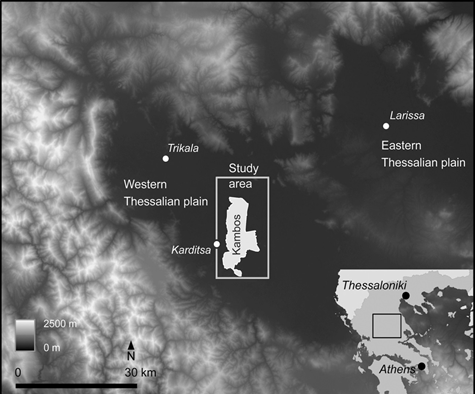
The multidisciplinary landscape project ‘Long Time, No See’ (2014-2018), carried out by a large, international research team under the auspices of the Ephorate of Antiquities of Karditsa (Hellenic Ministry of Culture & Sports), is revolutionising our understanding of the prehistoric to pre-modern cultural landscapes of the Kambos area in western Thessaly. Moving from regional to site-specific contexts, we have successfully integrated historical aerial photography and satellite imagery, extensive and intensive field survey, geoarchaeological, palaeoenvironmental, bioarchaeological and material culture studies and proved that the central-western Thessalian plain was a densely occupied and constructed landscape since the earliest phases of the Neolithic (mid-7th mil. BCE).
The western plain has been long considered the backwater of prehistoric and early historic Thessaly. Our innovative conceptual and methodological approach challenges traditional stereotypes and demonstrates that the scanty previous knowledge reflects heavy, localised alluvial burial of sites and catastrophic agricultural levelling in the early 1970’s. The discovery and documentation of an unprecedented number of prehistoric and early historic settlements, pathways and formal roads, field systems and funerary tombs and alignments changes our understanding of diachronic social use of space, settlement and communication patterns. Moreover, the systematic study of the surveyed and excavated pottery assemblages provides new fascinating insights into local technological traditions and prehistoric pottery production and circulation across the western Thessalian plain and beyond.
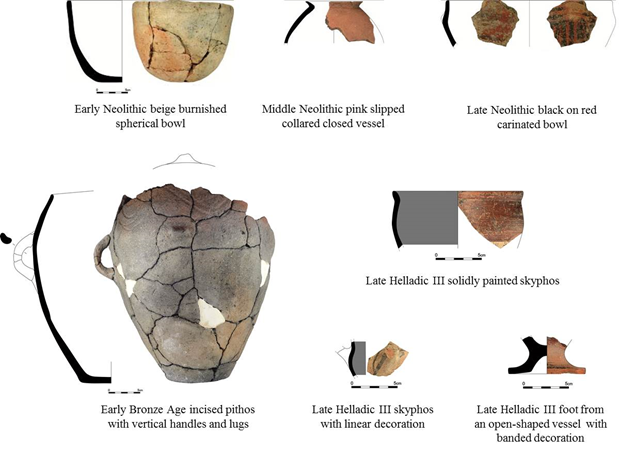
The generous grant provided by MAT was used for drawing (R. Exarchou, L. Tasiopoulou), photography (D. Panousis) and digital integration (R. Exarchou, A. Papagiannis) of all documentation, of 242 representative Neolithic, Bronze Age and Early Iron Age sherds, selected during the systematic macroscopic study of the LTNS pottery (Dr A. Dimoula, G. Papadias, N. Saridaki, E. Vliora). The ultimate aim of detailed documentation work is the final publication of the LTNS ceramic assemblages.
Location of the study area (Orengo et al. 2015: Fig. 1)
For further information, please contact Dr Nancy Krahtopoulou (Ephrorate of Antiquities of Karditsa, Hellenic Ministry of Culture & Sports) at akrachtopoulou@culture.gr.
References:
Orengo, H.A., Krahtopoulou, A., Garcia-Molsosa, A., Palaiochoritis, K., Stamati, A. 2015. Photogrammetric discovery of the hidden long-term landscapes of western Thessaly, central Greece. Journal of Archaeological Science 65: 100-109. http://dx.doi.org/10.1016/j.jas.2015.10.008
Krahtopoulou, A., Dimoula, A., Livarda, A., Saridaki, N. 2018. The discovery of the earliest specialised Middle Neolithic pottery workshop in western Thessaly, central Greece. Antiquity 92 362, e5: 1-7. https://doi.org/10.15184/aqy.2018.54
Dimoula, A., Saridaki, N., Vliora, E., Papadias, G. in press. The secrets of the Kambos – the study of the prehistoric pottery assemblage. AETHSE 6.
Krahtopoulou, A., Orengo, H.A., Dimoula, A., Garcia-Molsosa, A., Palaiochoritis, K., Saridaki, N. in press. The secrets of the Kambos – the Neolithic. AETHSE 6.
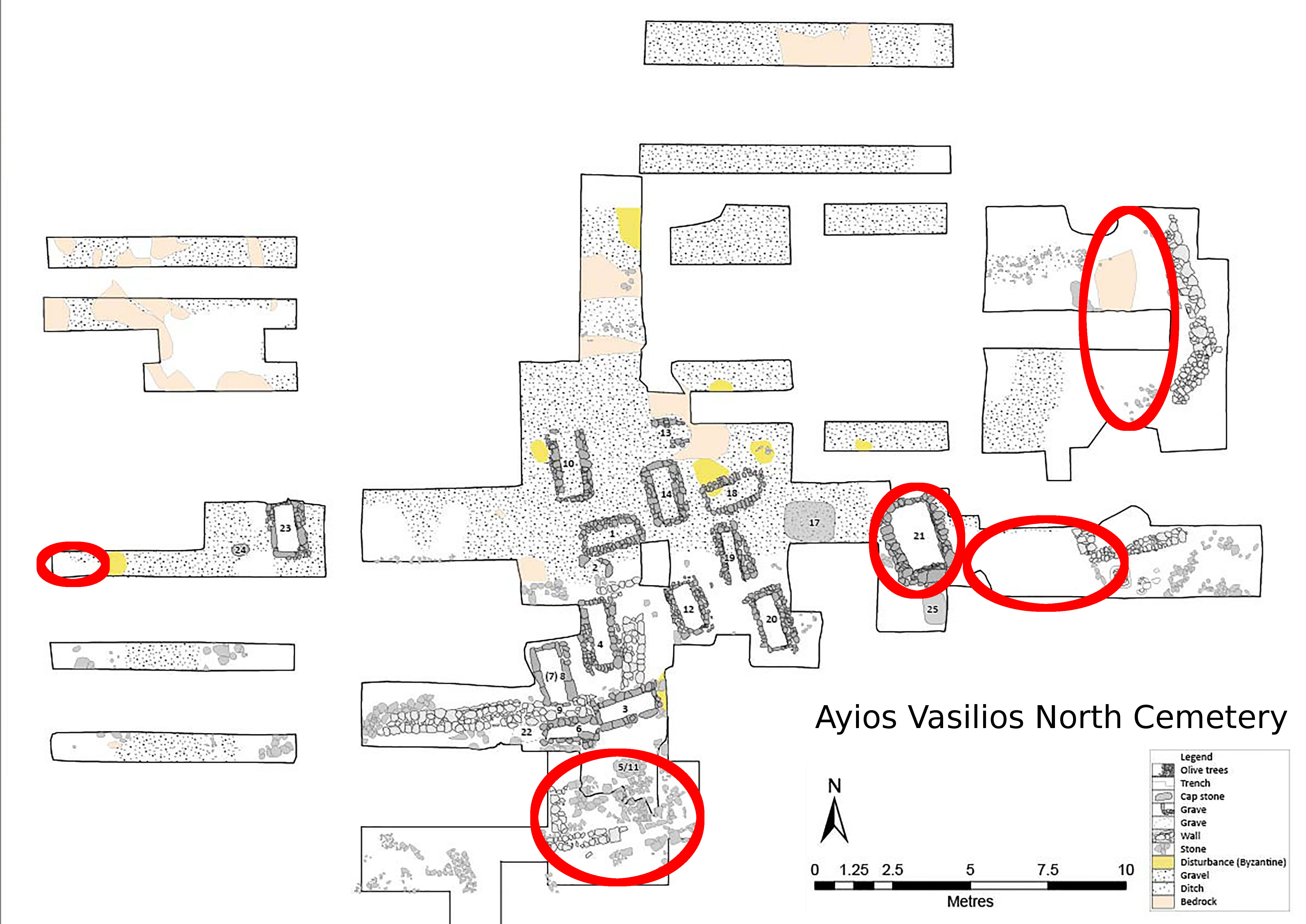
The importance of Ayios Vasilios became immediately obvious with the recent discovery of a Linear B archive, a monumental complex and rich finds which prove that this is the palatial centre of Mycenaean Laconia. The excavation of the Early Mycenaean North Cemetery (c. 1700-1400 BC) provides a unique opportunity to study the period of the rise of Ayios Vasilios.
Ayios Vasilios differs from other Mycenaean palaces in some important respects: it shows considerable influence from the Minoan world and has been destroyed 50 to 70 years earlier. A better understanding of its history requires a detailed pottery study. The area of the North Cemetery currently offers the site’s most complete stratified ceramic sequence for the Mycenaean period (c. 1700-1200 BC). In addition, the pottery study allows valuable insights into technological aspects, consumption practices and contacts of the local community.
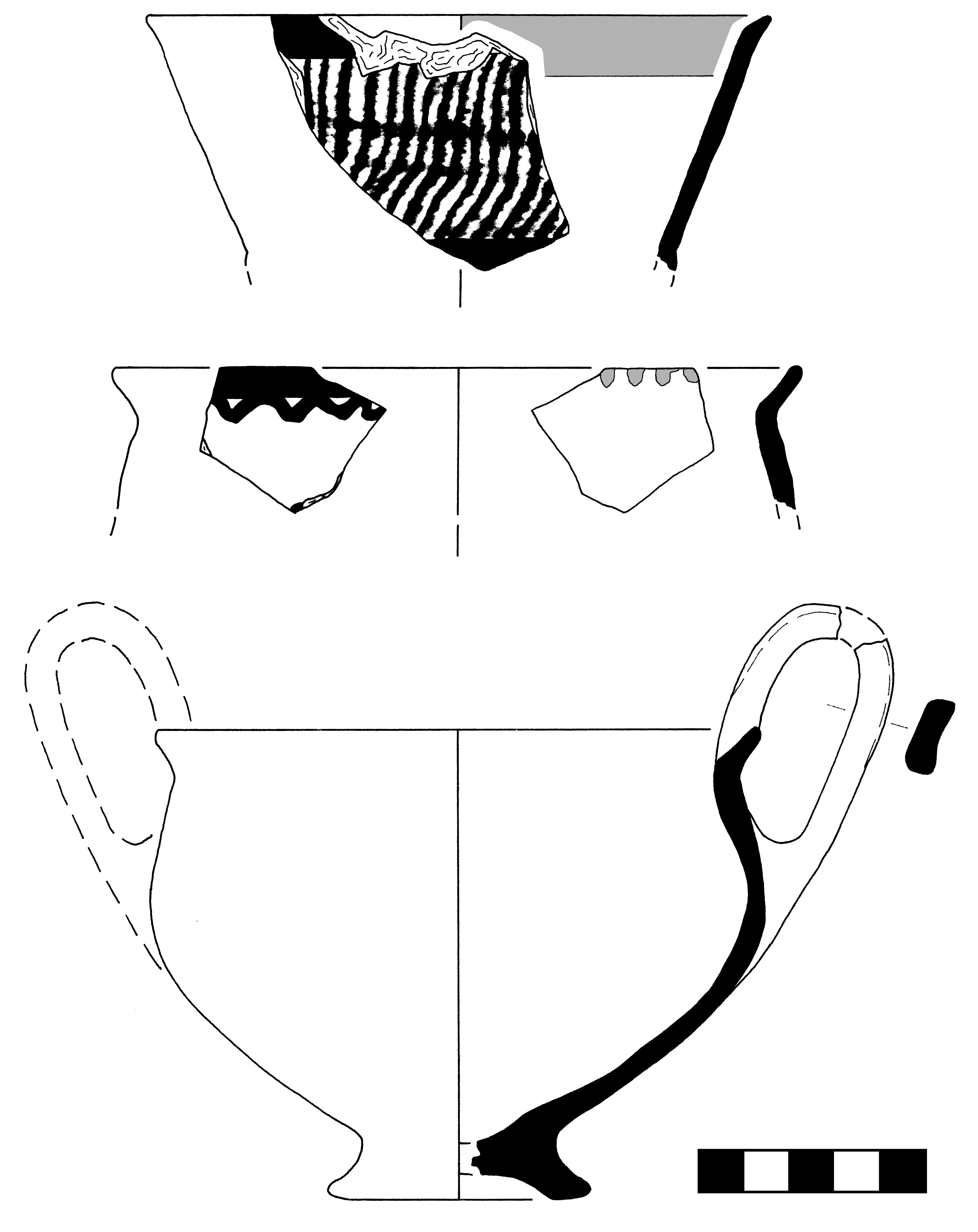
The generous funding by MAT in 2015, 2016 and 2018 enabled the full recording and drawing of the ceramics found in a large domestic dump of a rarely attested phase (c. 1650-1550 BC). The study includes also assemblages of later Mycenaean phases (c. 1450-1200 BC) which imply that the cemetery was still respected in this period. Results of these studies are in press or in preparation.
Plan of the Ayios Vasilios North Cemetery and locations of studied deposits (plan by Irene Koulogeorgiou and Gary Nobles) Early Mycenaean vessel fragments from the North Cemetery area (drawing by Vasco Hachtmann)
The Minoan Palace at Malia was discovered and excavated by Greek and French archaeologists at the beginning of the 20th century. The second largest palace in Crete after the one excavated by Sir Arthur Evans at Knossos, the edifice was built around 1900 BCE and used until 1390 BCE, a long period marked by a series of destructions. A major catastrophic event around 1700 BCE thoroughly destroyed the First or Protopalatial Palace (ca. 1900-1700 BCE), after which the edifice was reconstructed in the Neopalatial period (ca. 1700-1450 BCE). Because of the extensive rebuilding of the Second Palace, little is known of the shape and function(s) of the Protopalatial edifice. A new architectural and stratigraphic study of the ruin under the aegis of the French School at Athens aims to fulfil this gap in our knowledge of one of the major edifices of Minoan Crete.
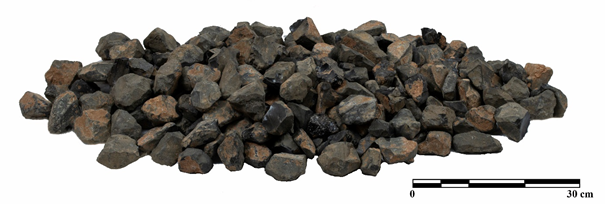
With the support of MAT, we were able in 2018 to focus on the study of a deposit of 173 obsidian unmodified blocks or ‘nodules’ found in a Protopalatial destruction layer in the North-West Area of the Palace. This constitutes the largest assemblage of raw obsidian nodules ever discovered in Minoan Crete and the wider Aegean. Five pieces originate from the Dodecanesian source of Gyali, while the bulk of the obsidian nodules has visual characteristics that indicate procurement from Melos in the Cyclades. The significance of this assemblage lies in it consisting primarily in raw material, i.e. nodules that were collected and transported to Malia before being used to manufacture delicate, razor-sharp blades.
The generous funding of MAT has made it possible to document and complete the full study of this impressive yet seldom published assemblage in order to prepare a publication that will consider it within the larger discussion on (a) the nature of obsidian consumption at Protopalatial Malia, (b) the role of the Palace in the procurement and disbursement of exotic commodities, and (c) the relationship of crafting to political power.
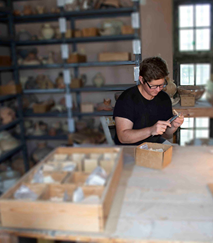
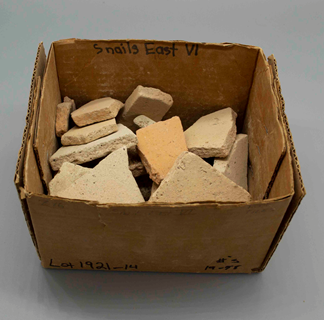
The aim of the project was to examine and document all 195 Early Helladic (EH) ceramic roofing tile fragments from Zygouries that were excavated in 1921 by Carl Blegen. The planned monograph presenting this work will be the first publication of a complete EH tile assemblage. It will also offer a re-analysis of the social organization and economy at this important EH site.
The ceramic tiled roof is an invention of EH mainland Greece. Although EH tiles have been recognized for nearly a century, a complete assemblage has yet to be published. Previously, site publications have typically presented the tiles as components of the building’s superstructure, rather than as important objects with interpretive value on their own.
Our work with this assemblage will demonstrate that the production of a single tiled roof at Zygouries required a massive investment of time, resources, and labour. Consequently, we will be able to offer a new perspective on the nature of rulership, craft, trade, and social organization in the Early Bronze Age.
The MAT funding was essential to bring this project to completion by sponsoring the final study season at Ancient Corinth and the hiring of an archaeological illustrator to draw 30 tiles.
Measurement of one of Zygouries’s EH II tiles (Photo: K. Jazwa)
A box of EH II tiles from House of the Snailshells (Zygouries). (Photo: K. Jazwa)


 M.A.T.
